6-month Independent research project, 2023
6-month Independent research project, 2023
6-month Independent research project, 2023
MEDBOX - EMPATHETIC ECOSYSTEM FOR
HOUSEHOLD MEDICATION MANAGEMENT
MEDBOX - EMPATHETIC ECOSYSTEM FOR HOUSEHOLD MEDICATION MANAGEMENT
MEDBOX - EMPATHETIC ECOSYSTEM FOR
HOUSEHOLD MEDICATION MANAGEMENT
A holistic service-product system transforming cold clinical treatment into a visualised, emotionally connected family care experience, bridging the psychological and safety gaps between long-term patients and distant caregivers.
A holistic service-product system transforming cold clinical treatment into a visualised, emotionally connected family care experience, bridging the psychological and safety gaps between long-term patients and distant caregivers.
A holistic service-product system transforming cold clinical treatment into a visualised, emotionally connected family care experience, bridging the psychological and safety gaps between long-term patients and distant caregivers.
Date
Date
Date
2023
2023
2023
Industry
Industry
Industry
Healthcare
Healthcare
Healthcare
My Role
My Role
My Role
UXUI Researcher & Designer
UXUI Researcher & Designer
UXUI Researcher & Designer
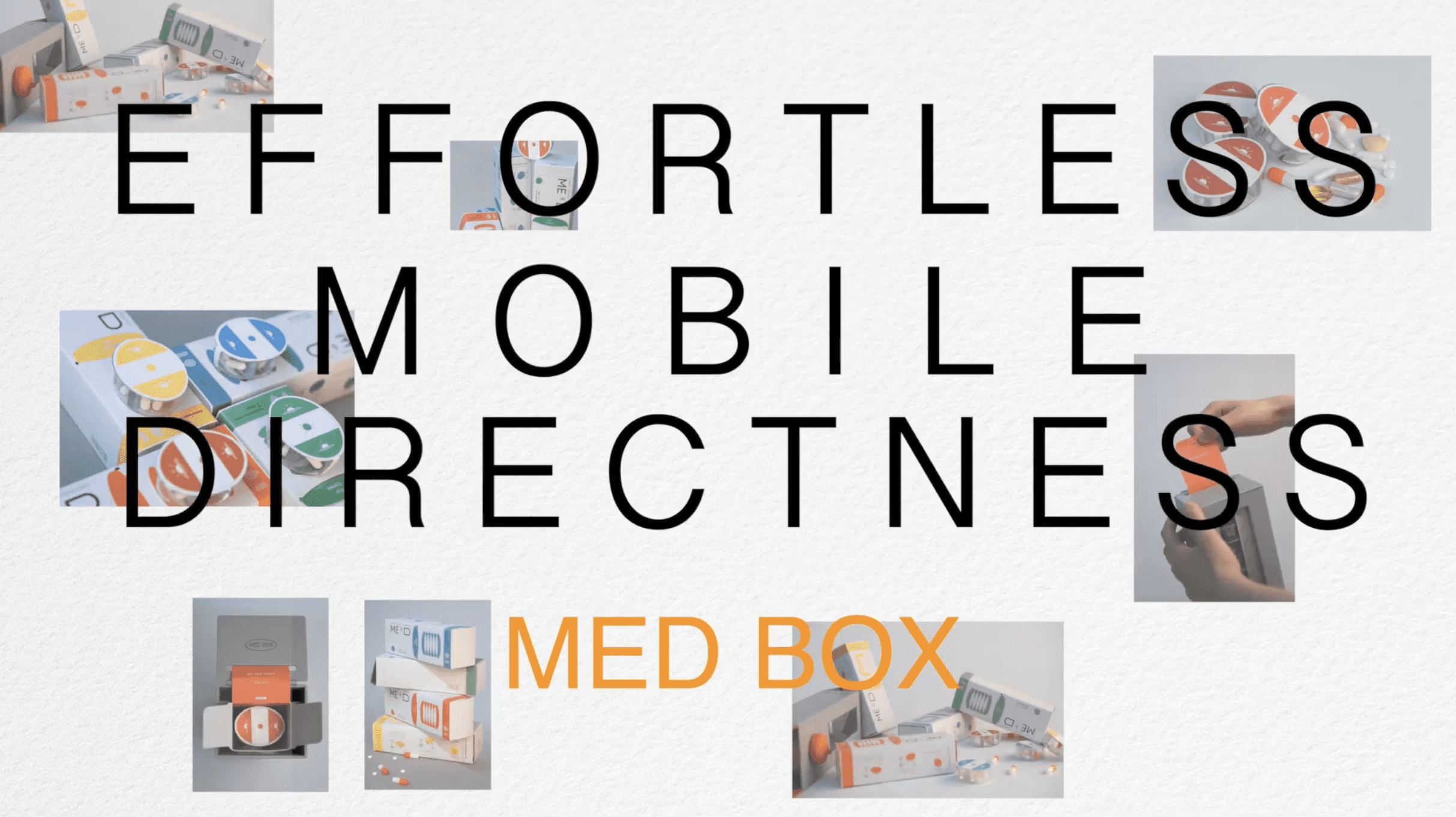
Discover intro video
Discover intro video
The Overview
The Overview
The Overview
When a family member receives a serious diagnosis, two invisible struggles begin in parallel.
The patient: managing daily medication alone, often feeling like a burden.
The caregiver: unable to be physically present every second, living with quiet guilt every time
they cannot check in.
I have personally experienced those two tensions, and thus Medbox was born, designed to bridge that gap.
When a family member receives a serious diagnosis, two invisible struggles begin in parallel.
The patient: managing daily medication alone, often feeling like a burden.
The caregiver: unable to be physically present every second, living with quiet guilt every time
they cannot check in.
I have personally experienced those two tensions, and thus Medbox was born, designed to bridge that gap.
When a family member receives a serious diagnosis, two invisible struggles begin in parallel.
The patient: managing daily medication alone, often feeling like a burden.
The caregiver: unable to be physically present every second, living with quiet guilt every time
they cannot check in.
I have personally experienced those two tensions, and thus Medbox was born, designed to bridge that gap.
The Results
The Results
The Results
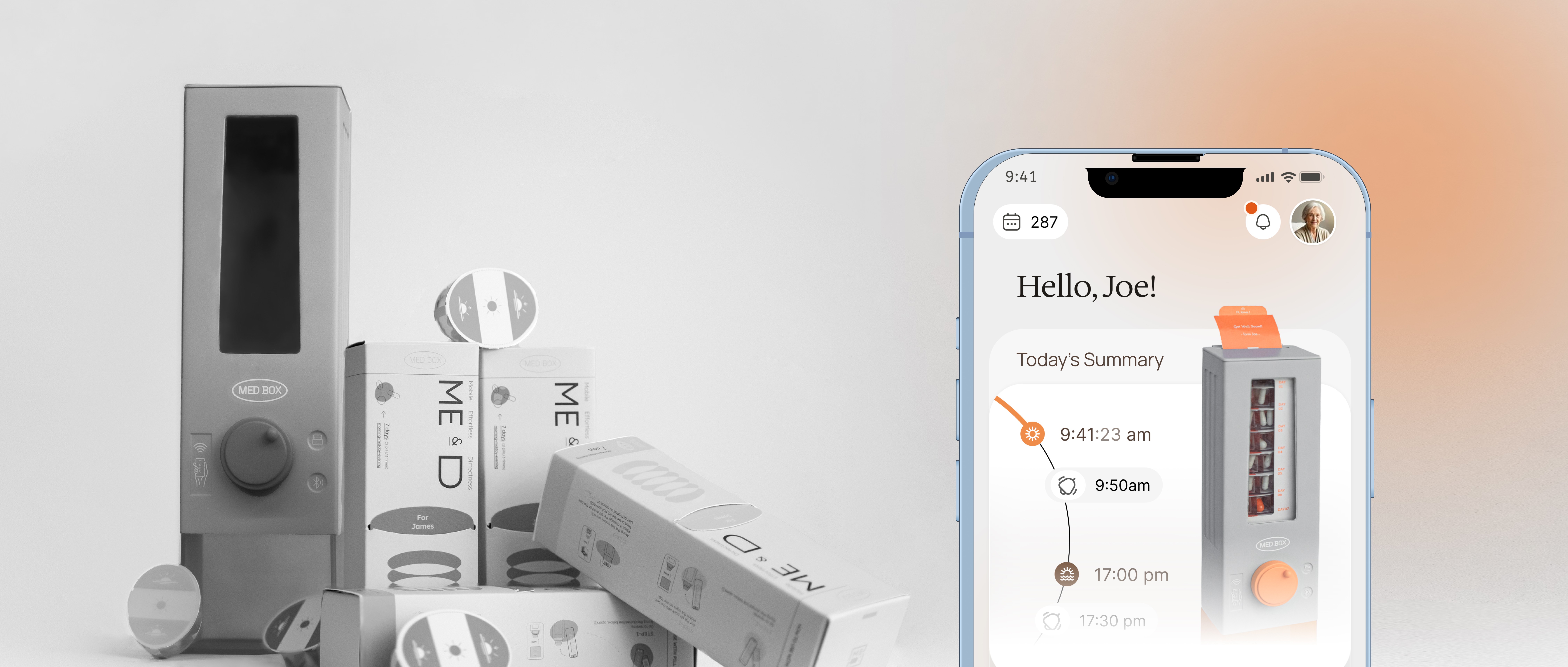
The system connects patients and caregivers through three touchpoints:
1) a companion app for caregivers
2) a physical dispenser at home for patients that makes daily medication safer and less clinical
3) the redesigned medical packaging
Together, they turn a solitary medical routine into something shared among family members.
The system connects patients and caregivers through three touchpoints:
1) a companion app for caregivers
2) a physical dispenser at home for patients that makes daily medication safer and less clinical
3) the redesigned medical packaging
Together, they turn a solitary medical routine into something shared among family members.
The system connects patients and caregivers through three touchpoints:
1) a companion app for caregivers
2) a physical dispenser at home for patients that makes daily medication safer and less clinical
3) the redesigned medical packaging
Together, they turn a solitary medical routine into something shared among family members.
(click to see details)
(click to see details)
Where DID this began? What did i found?
Where DID this began? What did i found?
BACKGROUND & PROBLEM
BACKGROUND & PROBLEM
BACKGROUND & PROBLEM
Users' pain points
Not a lack of care, but a lack of connection.
Users' pain points
Not a lack of care, but a lack of connection.
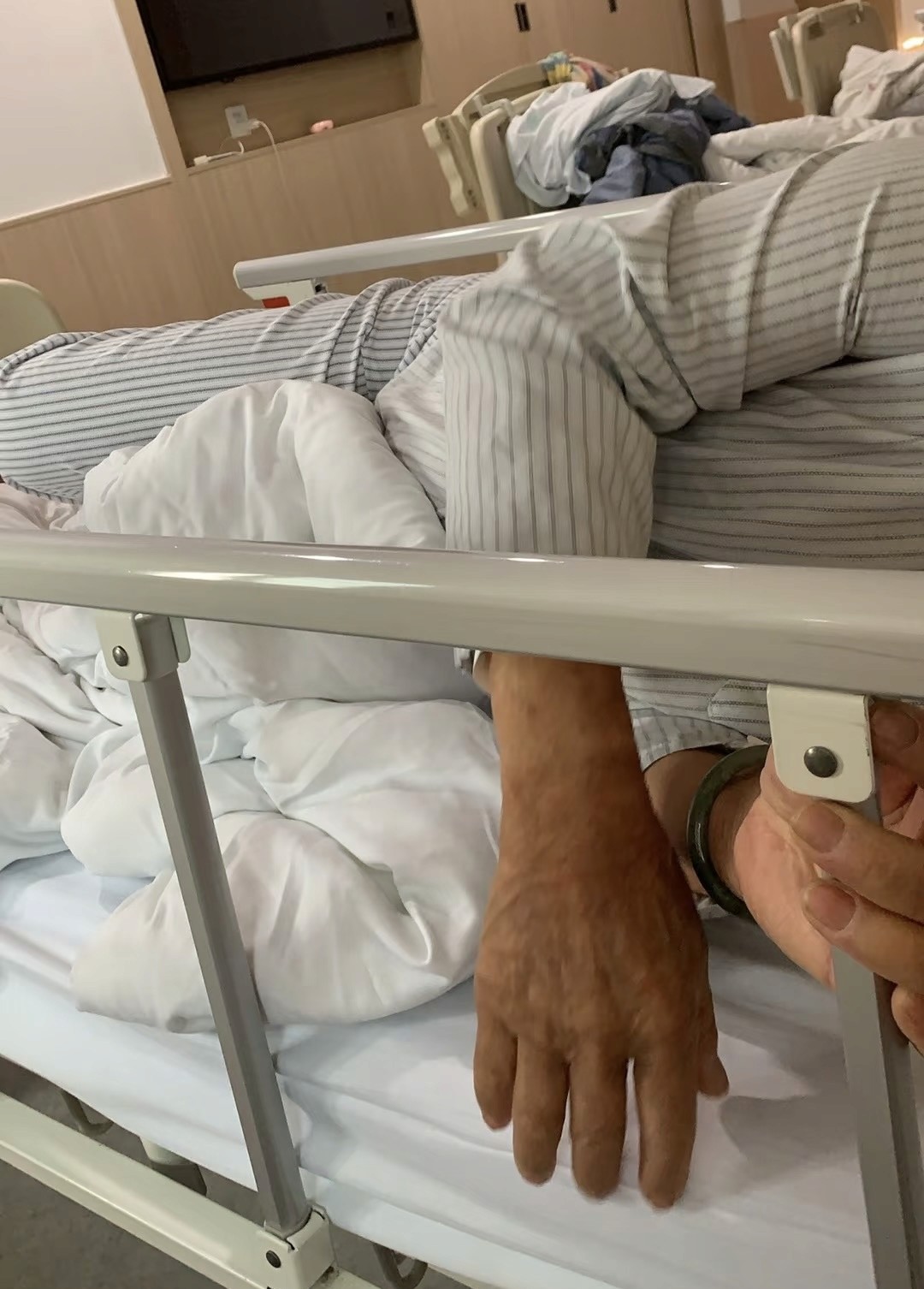
In 2022, I returned home to care for my grandmother, who had been diagnosed with terminal cancer.
Every morning, I watched her open the bedside drawer, stuffed with pills, blister packs, and take her medication alone. She would swallow them quietly, accompanied by a long sigh, then sit motionless on the edge of the bed.
One afternoon, I wasn't home. She forgot her dose. The adverse reaction that followed was minor, but the guilt I carried back to her bedside was not. From that day on, every time I had to leave, the same question followed me out the door: is she managing her medication properly? (Not just physically, but mentally as well.)
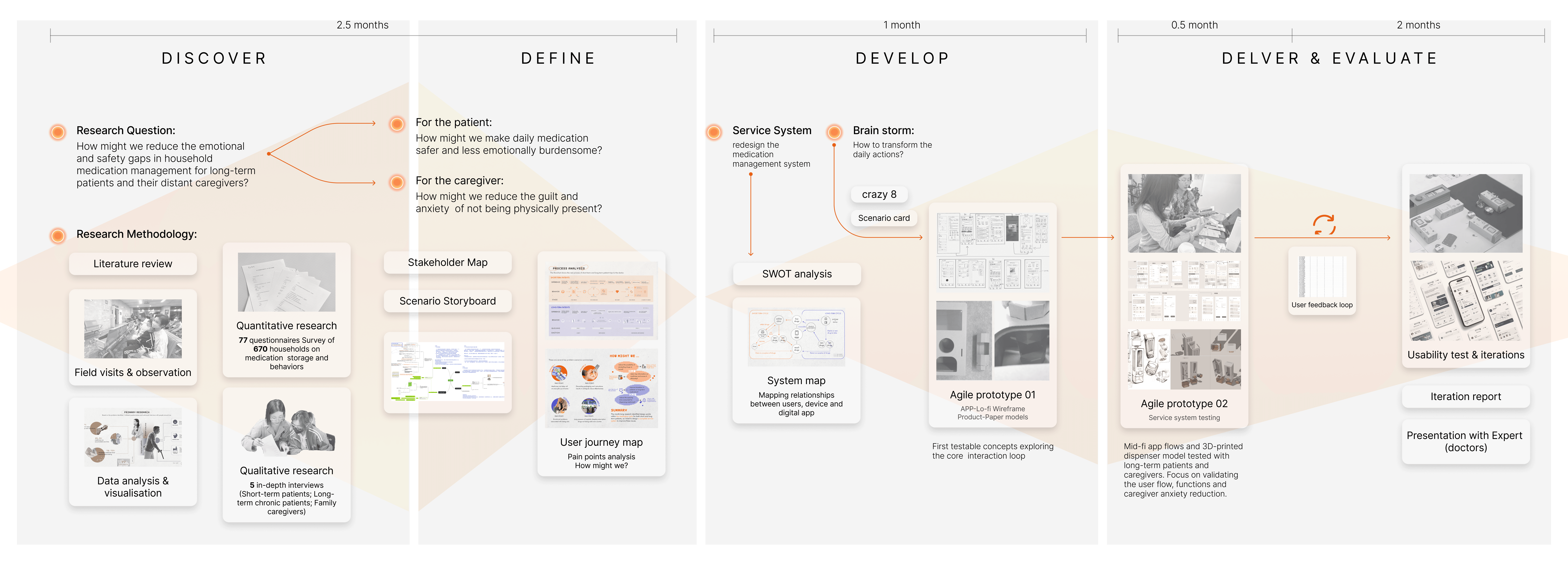
Amidst the hustle and bustle of modern life, this overwhelming sense of guilt is not unique to me. During the months that followed, whilst accompanying her in hospital, I conducted 77 questionnaire surveys and 5 in-depth interviews with short-stay patients, long-term chronic patients, their family carers and healthcare professionals.
What I found was not a medication problem. It was a connection pattern barriers.
Caregivers who called home three times a day, not because they doubted their loved ones, but because no system gave them any other way to know.
Patients who took their pills in silence, quietly convinced they had already become too much of a burden to ask for help…
In 2022, I returned home to care for my grandmother, who had been diagnosed with terminal cancer.
Every morning, I watched her open the bedside drawer, stuffed with pills, blister packs, and take her medication alone. She would swallow them quietly, accompanied by a long sigh, then sit motionless on the edge of the bed.
One afternoon, I wasn't home. She forgot her dose. The adverse reaction that followed was minor, but the guilt I carried back to her bedside was not. From that day on, every time I had to leave, the same question followed me out the door: is she managing her medication properly? (Not just physically, but mentally as well.)
Amidst the hustle and bustle of modern life, this overwhelming sense of guilt is not unique to me. During the months that followed, whilst accompanying her in hospital, I conducted 77 questionnaire surveys and 5 in-depth interviews with short-stay patients, long-term chronic patients, their family carers and healthcare professionals.
What I found was not a medication problem. It was a connection pattern barriers.
Caregivers who called home three times a day, not because they doubted their loved ones, but because no system gave them any other way to know.
Patients who took their pills in silence, quietly convinced they had already become too much of a burden to ask for help…
In 2022, I returned home to care for my grandmother, who had been diagnosed with terminal cancer.
Every morning, I watched her open the bedside drawer, stuffed with pills, blister packs, and take her medication alone. She would swallow them quietly, accompanied by a long sigh, then sit motionless on the edge of the bed.
One afternoon, I wasn't home. She forgot her dose. The adverse reaction that followed was minor, but the guilt I carried back to her bedside was not. From that day on, every time I had to leave, the same question followed me out the door: is she managing her medication properly? (Not just physically, but mentally as well.)
Amidst the hustle and bustle of modern life, this overwhelming sense of guilt is not unique to me. During the months that followed, whilst accompanying her in hospital, I conducted 77 questionnaire surveys and 5 in-depth interviews with short-stay patients, long-term chronic patients, their family carers and healthcare professionals.
What I found was not a medication problem. It was a connection pattern barriers.
Caregivers who called home three times a day, not because they doubted their loved ones, but because no system gave them any other way to know.
Patients who took their pills in silence, quietly convinced they had already become too much of a burden to ask for help…
"I never know if my mum has taken her pills. I call her every day just to check, but I still worry."
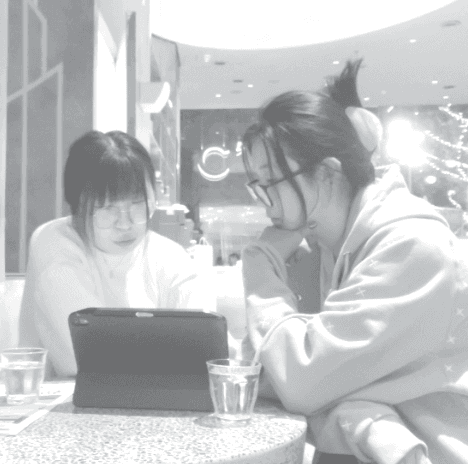
Miss. Wang
Family caregiver, daughter, age 28
"I never know if my mum has taken her pills. I call her every day just to check, but I still worry."
Miss. Wang
Family caregiver, daughter, age 28
"I feel like I'm always causing trouble."
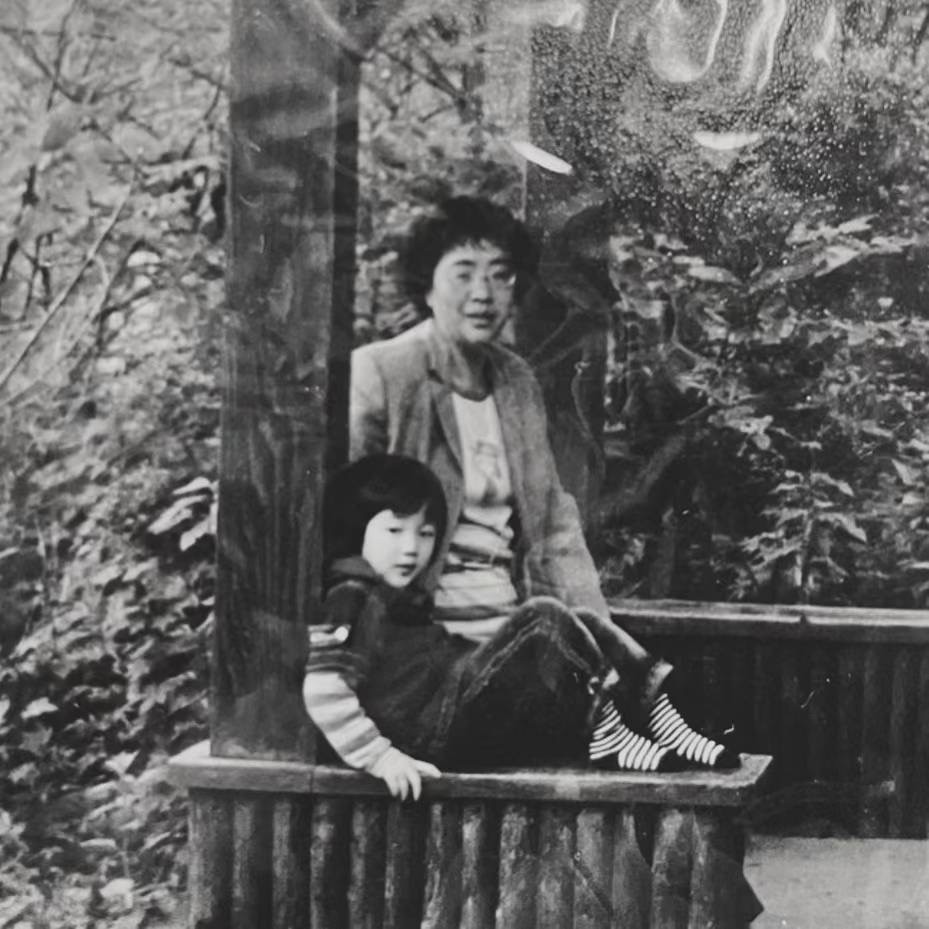
My grandmather
End-stage lung cancer patient, aged 69
"I feel like I'm always causing trouble."
My grandmather
End-stage lung cancer patient, aged 69
72.73%
of stockpiled medicines expired before being taken
64.87%
of caregivers feel guilty because can’t be with them every single moment
45.5%
of patient has previously experienced problems with forgetting to take their medication or taking it twice
Problem Statement
Problem Statement
Apart from considering the issue from the user’s perspective, I have also broken down the concept of 「guilt」 from additional viewpoints.
Pain point 01
Behavioural level
Guilt doesn't stay internal. It manifests as repeated phone calls, a persistent sense of low-level anxiety, and in some cases, even overprotectiveness. All of these disrupt the carer’s own daily life, creating a negative loop.
Pain point 02
Systemic Level
Caregiver guilt is largely an information gap problem. When caregivers have no reliable signal that a dose has been taken, they default to assumption and worry. The absence of feedback creates the emotional burden.
Pain point 03
Design Level
Existing medication management tools are designed for the patient. The caregiver's emotional state is treated as a side effect, not a design problem.
Healthcare treatment is not just a clinical act, it's also about the invisible connections.
This led to two defining questions that shaped everything that followed:
What if the moment a patient takes their medication could become a signal of reassurance, not just for themselves, but for the family member who couldn't be there?
What if we stopped designing for individual medication management, and started designing for a management system?
Healthcare treatment is not just a clinical act, it's also about the invisible connections.
This led to two defining questions that shaped everything that followed:
What if the moment a patient takes their medication could become a signal of reassurance, not just for themselves, but for the family member who couldn't be there?
What if we stopped designing for individual medication management, and started designing for a management system?
Healthcare treatment is not just a clinical act, it's also about the invisible connections.
This led to two defining questions that shaped everything that followed:
What if the moment a patient takes their medication could become a signal of reassurance, not just for themselves, but for the family member who couldn't be there?
What if we stopped designing for individual medication management, and started designing for a management system?
How might we
How might we give distant caregivers a reliable, real-time sense of connection, so that love doesn't have to feel like guilt?
For the caregiver
How might we
How might we improve boredom and the safety of taking medication in patients on long-term medication?
For the patient
What did i create?
What did i create?
DESIGN DELIVER
DESIGN DELIVER
DESIGN DELIVER

Design 01 — The Dispenser
Design 01 — The Dispenser
(How might we improve boredom and the safety of taking medication in patients on long-term medication?)
Inspired by the ritual of a coffee capsule machine, the MEDBOX dispenser reimagines medication as something closer to a daily habit.
Pre-loaded with a seven-day supply, the device releases one dose at a time, once the day's medication is taken, the mechanism locks, preventing accidental double-dosing.
(How might we improve boredom and the safety of taking medication in patients on long-term medication?)
Inspired by the ritual of a coffee capsule machine, the MEDBOX dispenser reimagines medication as something closer to a daily habit.
Pre-loaded with a seven-day supply, the device releases one dose at a time, once the day's medication is taken, the mechanism locks, preventing accidental double-dosing.
(How might we improve boredom and the safety of taking medication in patients on long-term medication?)
Inspired by the ritual of a coffee capsule machine, the MEDBOX dispenser reimagines medication as something closer to a daily habit.
Pre-loaded with a seven-day supply, the device releases one dose at a time, once the day's medication is taken, the mechanism locks, preventing accidental double-dosing.

Design 02 — The Companion App
Design 02 — The Companion App
( How might we give distant caregivers a reliable, real-time sense of connection, so that love doesn't have to feel like guilt?)
Real-time medication confirmation, missed dose alerts, and a shared family dashboard give caregivers visibility without surveillance,.
Beyond daily tracking, the app automatically generates monthly medication reports that can be shared directly with healthcare professionals, that turning fragmented daily records into a coherent picture of long-term health, and connecting the home to the clinic.
( How might we give distant caregivers a reliable, real-time sense of connection, so that love doesn't have to feel like guilt?)
Real-time medication confirmation, missed dose alerts, and a shared family dashboard give caregivers visibility without surveillance,.
Beyond daily tracking, the app automatically generates monthly medication reports that can be shared directly with healthcare professionals, that turning fragmented daily records into a coherent picture of long-term health, and connecting the home to the clinic.
( How might we give distant caregivers a reliable, real-time sense of connection, so that love doesn't have to feel like guilt?)
Real-time medication confirmation, missed dose alerts, and a shared family dashboard give caregivers visibility without surveillance,.
Beyond daily tracking, the app automatically generates monthly medication reports that can be shared directly with healthcare professionals, that turning fragmented daily records into a coherent picture of long-term health, and connecting the home to the clinic.
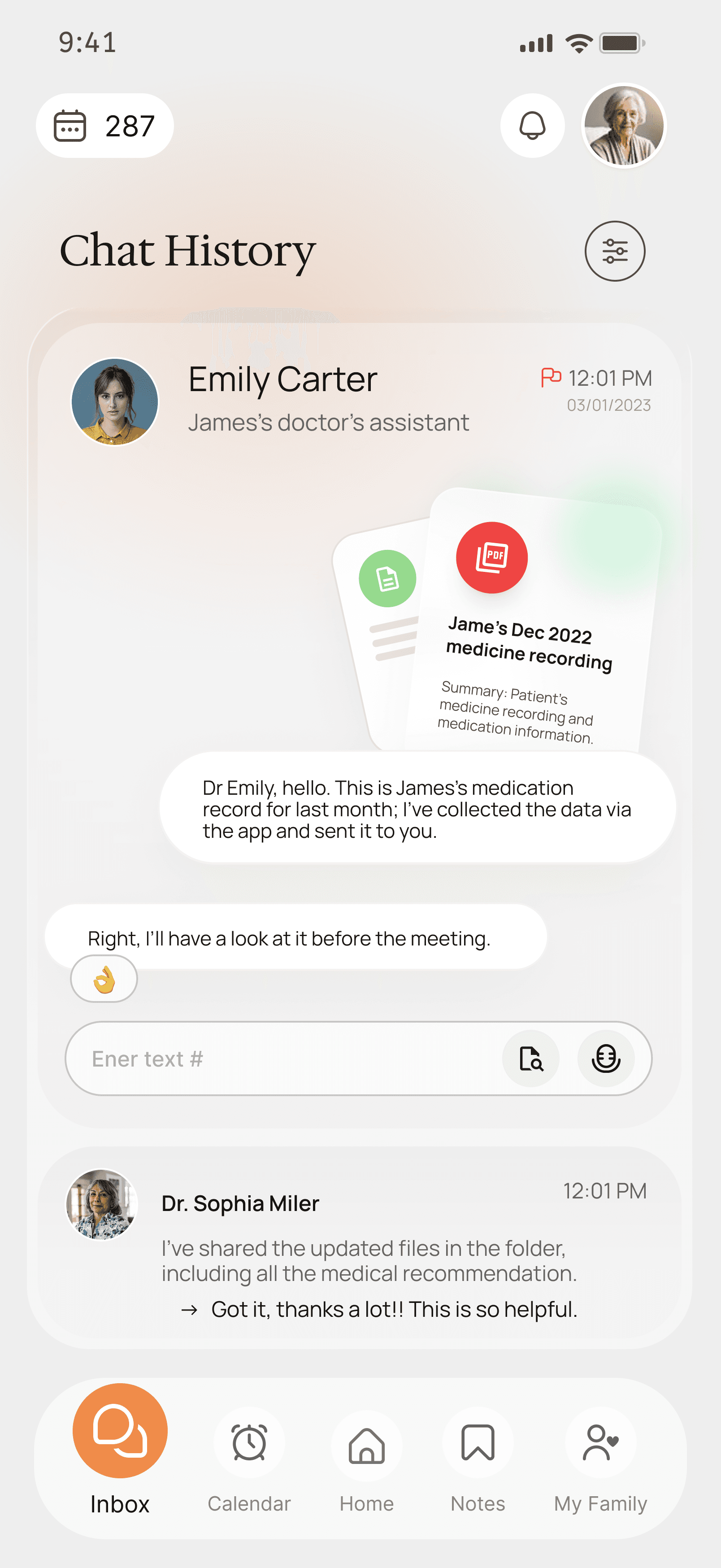
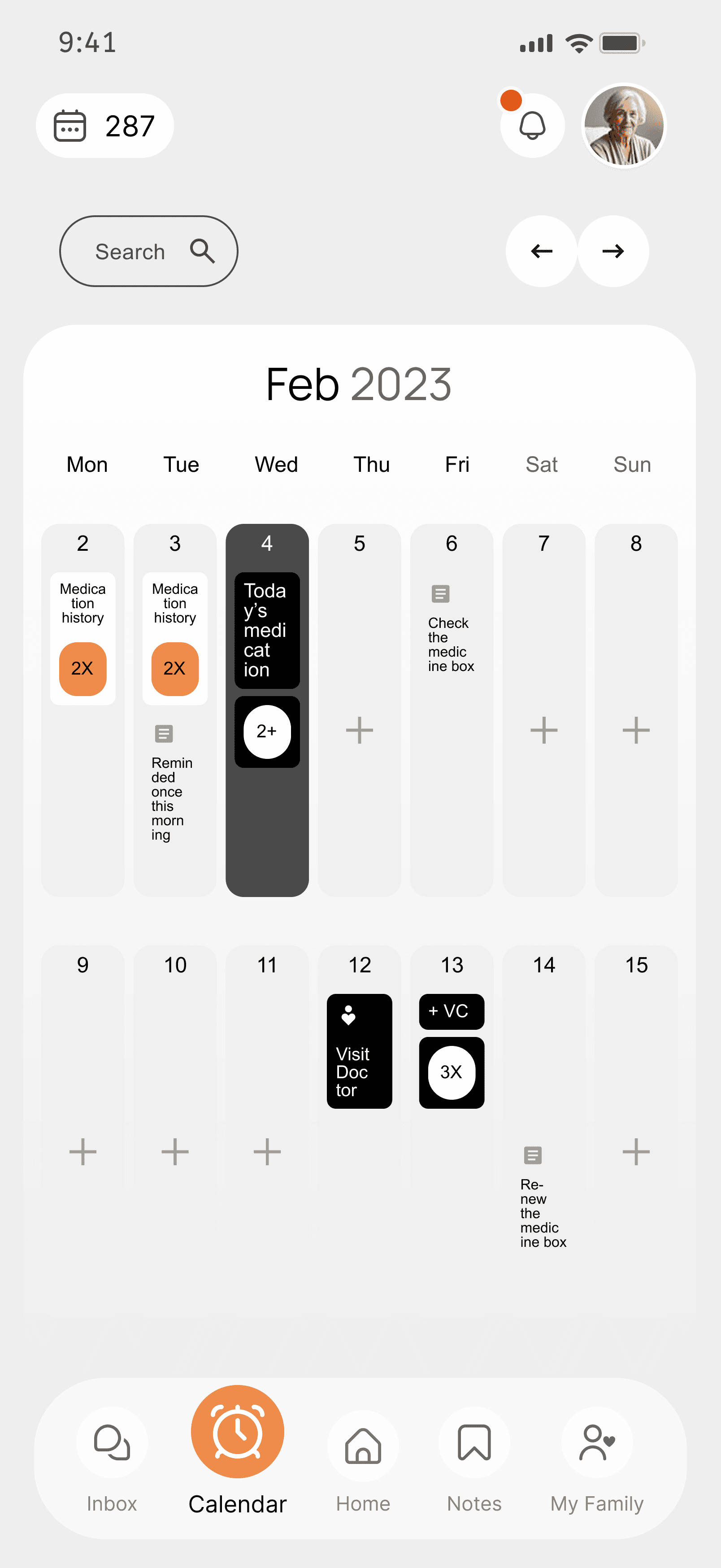
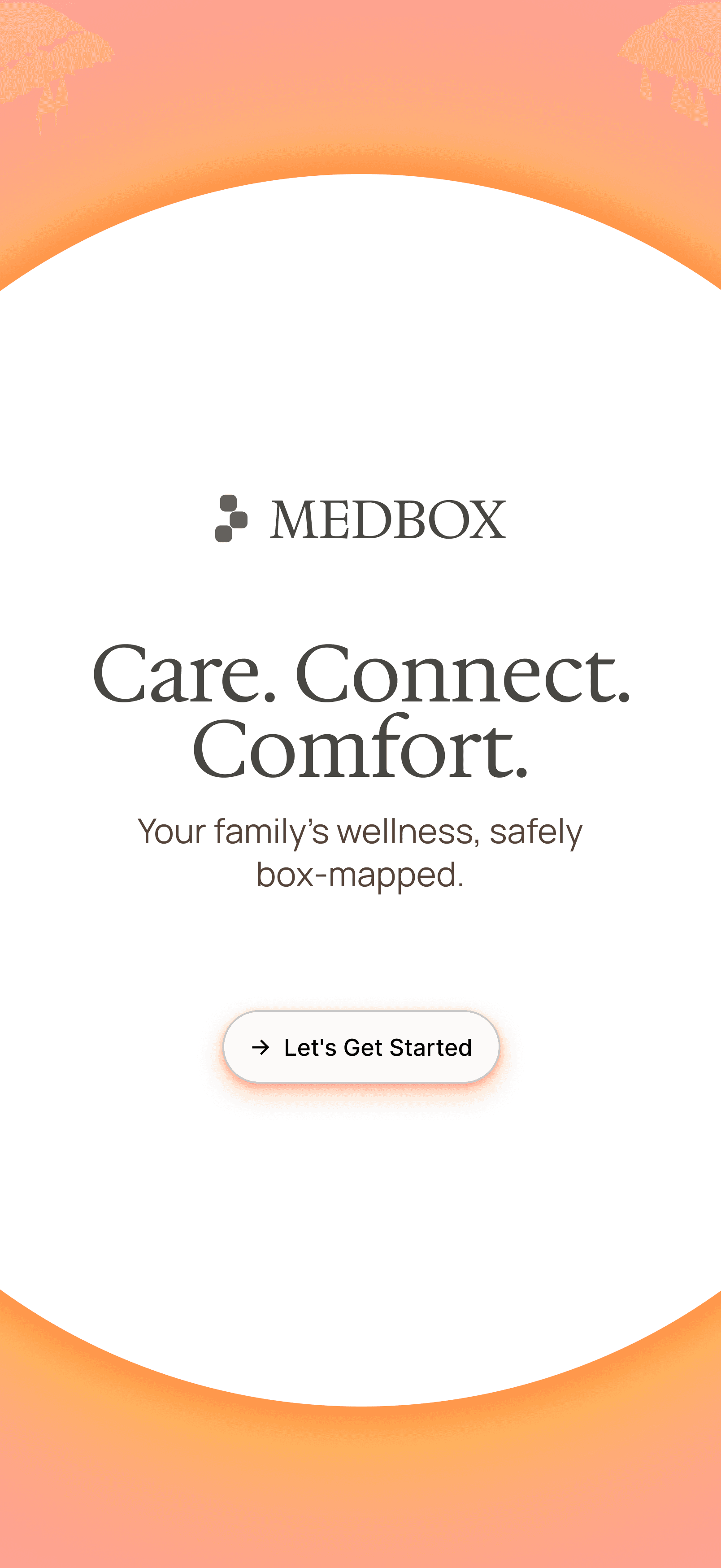
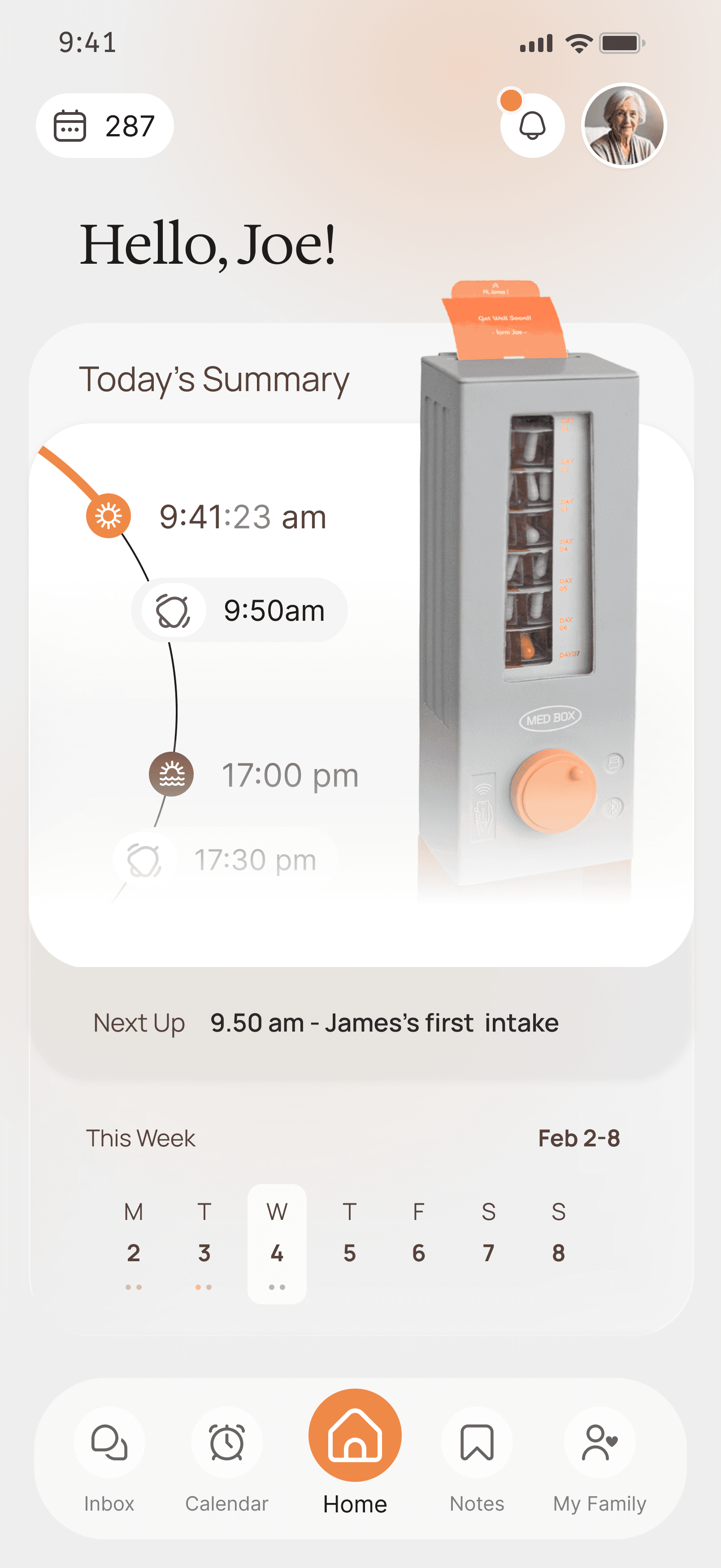
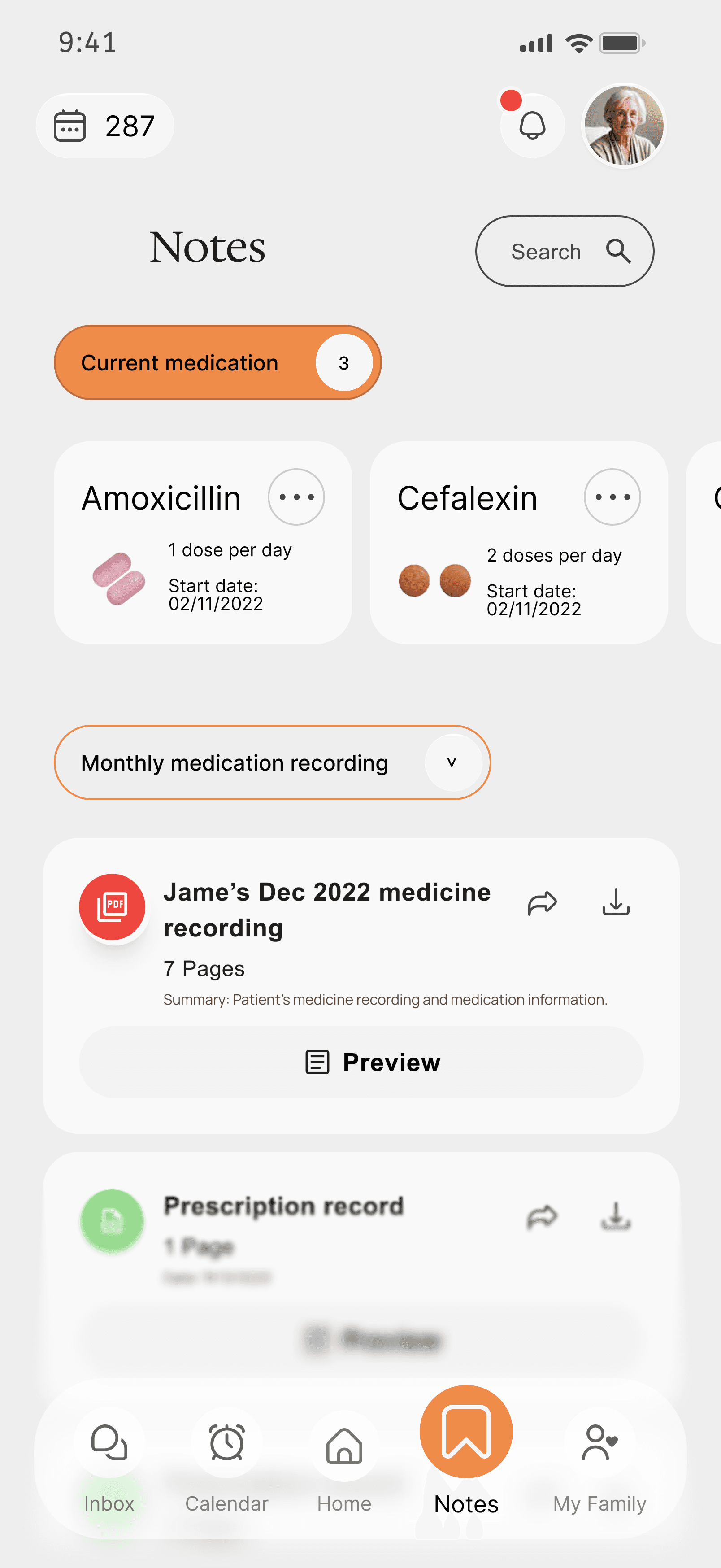
Design Details and Information Architecture (IA)
Design details

Take a note, All in one
You're in control
You're in control


Notification
Text
Call
A gentle reminder
Today 9:50 am
Connect to device
Connect to device

|
Pick a report or a recording, then send!
You're under care
You're under care
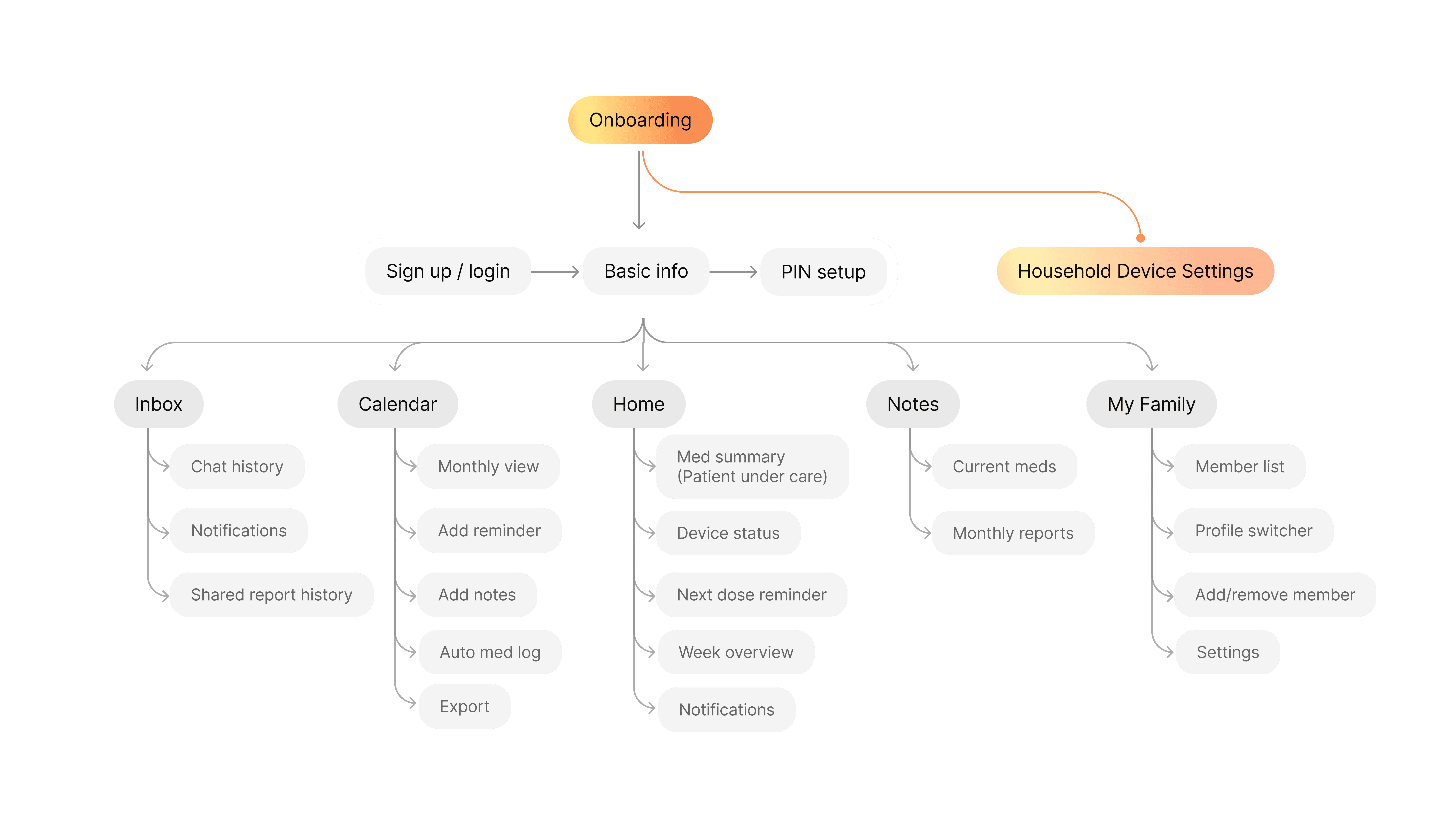
Design Highlights
Design Highlights
Design Highlights
Crafted compelling multiple value propositions
MEDBOX was designed to serve three distinct groups simultaneously: patients managing medication alone, caregivers monitoring from a distance, and healthcare professionals needing reliable medical records for tracking.
Human-centred, evidence-based design decisions
Users were involved across all three rounds of prototyping, from paper models to high-fidelity interactions, through collecting feedback for interactions, the final design decisions reflected real behaviour rather than idealised use.
An end-to-end design cycle, not a single touchpoint redesign
MEDBOX mapped the full medication lifecycle across digital app, physical device, and packaging that work together as one connected system.
Crafted compelling multiple value propositions
MEDBOX was designed to serve three distinct groups simultaneously: patients managing medication alone, caregivers monitoring from a distance, and healthcare professionals needing reliable medical records for tracking.
Human-centred, evidence-based design decisions
Users were involved across all three rounds of prototyping, from paper models to high-fidelity interactions, through collecting feedback for interactions, the final design decisions reflected real behaviour rather than idealised use.
An end-to-end design cycle, not a single touchpoint redesign
MEDBOX mapped the full medication lifecycle across digital app, physical device, and packaging that work together as one connected system.
Crafted compelling multiple value propositions
MEDBOX was designed to serve three distinct groups simultaneously: patients managing medication alone, caregivers monitoring from a distance, and healthcare professionals needing reliable medical records for tracking.
Human-centred, evidence-based design decisions
Users were involved across all three rounds of prototyping, from paper models to high-fidelity interactions, through collecting feedback for interactions, the final design decisions reflected real behaviour rather than idealised use.
An end-to-end design cycle, not a single touchpoint redesign
MEDBOX mapped the full medication lifecycle across digital app, physical device, and packaging that work together as one connected system.
What did I build? What did I learn?
What did I build? What did I learn?
PROCESS & CHALLENGES
PROCESS & CHALLENGES
PROCESS & CHALLENGES
From empathy to find what people couldn't say
From empathy to find what people couldn't say
During the research phase of this project, as I spoke with more and more people, I gradually realised that the most significant findings came not only from what people said, but from what I observed.
In the early stages of fieldwork, the behaviours I was documenting during the interviews couldn't fully account for the weight that kept surfacing in the observations. For example, whilst observing at the hospital, I heard a family member share that she called home three times a day, just because a mistake had happened once before, and she couldn't let it happen again. She said she would feel deeply guilty if she didn't keep checking. Tears, sighs, and long silences were not uncommon during this phase of research.
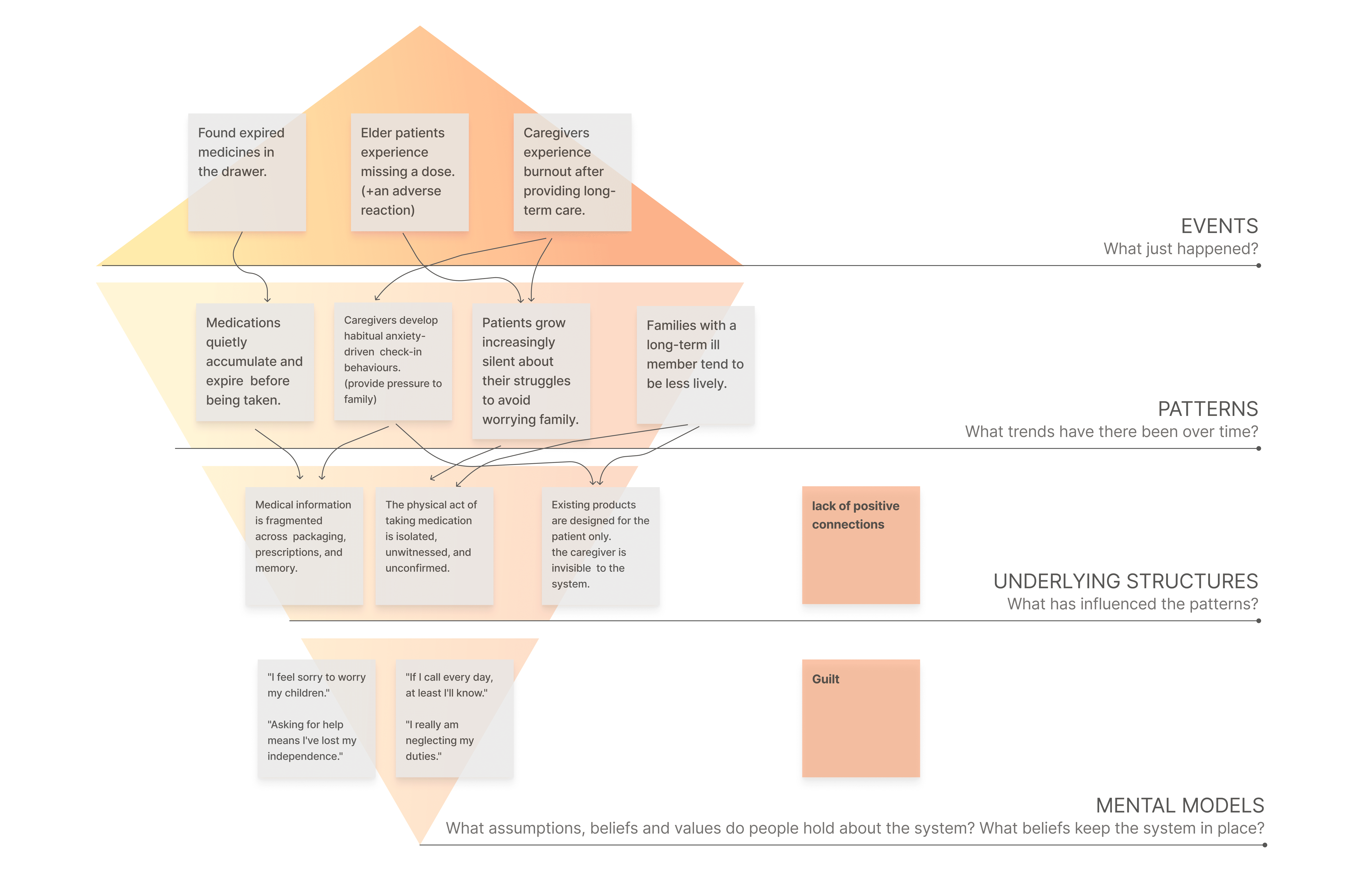
As a designer, I need to empathy what they said, what they did and what they feel, but I need to tidy up those tangles of language, behaviour and emotions. To make sense of this complexity, I turned to the iceberg model, using it to systematically map observable behaviours against the patterns, structures, and mental models beneath them. Cross-referencing what people did with what they believed helped me surface the core issue.
During the research phase of this project, as I spoke with more and more people, I gradually realised that the most significant findings came not only from what people said, but from what I observed.
In the early stages of fieldwork, the behaviours I was documenting during the interviews couldn't fully account for the weight that kept surfacing in the observations. For example, whilst observing at the hospital, I heard a family member share that she called home three times a day, just because a mistake had happened once before, and she couldn't let it happen again. She said she would feel deeply guilty if she didn't keep checking. Tears, sighs, and long silences were not uncommon during this phase of research.
As a designer, I need to empathy what they said, what they did and what they feel, but I need to tidy up those tangles of language, behaviour and emotions. To make sense of this complexity, I turned to the iceberg model, using it to systematically map observable behaviours against the patterns, structures, and mental models beneath them. Cross-referencing what people did with what they believed helped me surface the core issue.
During the research phase of this project, as I spoke with more and more people, I gradually realised that the most significant findings came not only from what people said, but from what I observed.
In the early stages of fieldwork, the behaviours I was documenting during the interviews couldn't fully account for the weight that kept surfacing in the observations. For example, whilst observing at the hospital, I heard a family member share that she called home three times a day, just because a mistake had happened once before, and she couldn't let it happen again. She said she would feel deeply guilty if she didn't keep checking. Tears, sighs, and long silences were not uncommon during this phase of research.
As a designer, I need to empathy what they said, what they did and what they feel, but I need to tidy up those tangles of language, behaviour and emotions. To make sense of this complexity, I turned to the iceberg model, using it to systematically map observable behaviours against the patterns, structures, and mental models beneath them. Cross-referencing what people did with what they believed helped me surface the core issue.

Storytelling skills for people who don't speak design
Storytelling skills for people who don't speak design
Storytelling is making ideas easier to understand, empowering users to meaningfully participate in the design process, especially during the prototype and usability test stage, to foster meaningful dialogue. Giving users visual, tangible, and accessible language helps them move beyond surface reactions. Rather than "I like it" or "I don't understand this", they begin to engage with the real question: Will this actually work for my life?
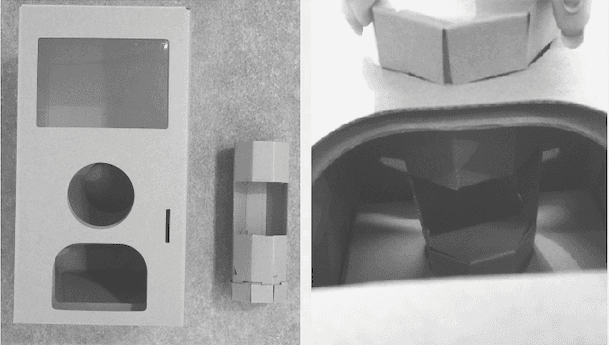
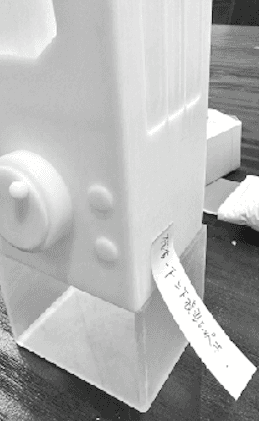
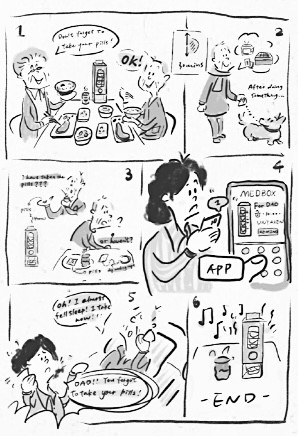
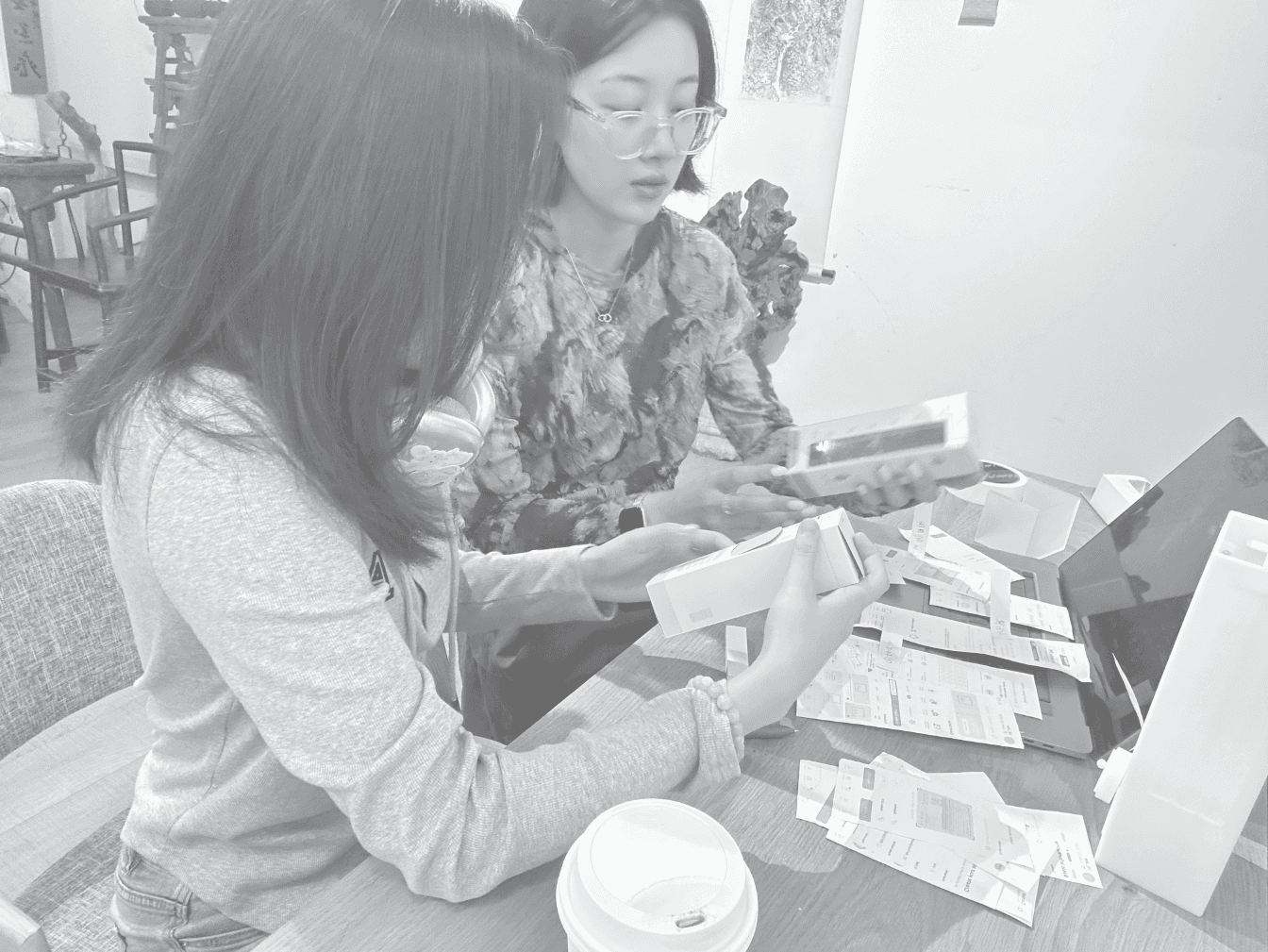
In this project, I learned this firsthand. I spent some time on creating a visual storyboard and some paper models before I started ideations, with some colourful stickers and post-it for them to pick up the points for "improving" or "good enough". Once users could hold the object and see themselves in the story, the feedback became specific, contradictory, and genuinely useful. Observing how they physically interacted with the prototype, where they hesitated, what they reached for instinctively, revealed insights that no direct question would have surfaced.
Storytelling is making ideas easier to understand, empowering users to meaningfully participate in the design process, especially during the prototype and usability test stage, to foster meaningful dialogue. Giving users visual, tangible, and accessible language helps them move beyond surface reactions. Rather than "I like it" or "I don't understand this", they begin to engage with the real question: Will this actually work for my life?
In this project, I learned this firsthand. I spent some time on creating a visual storyboard and some paper models before I started ideations, with some colourful stickers and post-it for them to pick up the points for "improving" or "good enough". Once users could hold the object and see themselves in the story, the feedback became specific, contradictory, and genuinely useful. Observing how they physically interacted with the prototype, where they hesitated, what they reached for instinctively, revealed insights that no direct question would have surfaced.
Storytelling is making ideas easier to understand, empowering users to meaningfully participate in the design process, especially during the prototype and usability test stage, to foster meaningful dialogue. Giving users visual, tangible, and accessible language helps them move beyond surface reactions. Rather than "I like it" or "I don't understand this", they begin to engage with the real question: Will this actually work for my life?
In this project, I learned this firsthand. I spent some time on creating a visual storyboard and some paper models before I started ideations, with some colourful stickers and post-it for them to pick up the points for "improving" or "good enough". Once users could hold the object and see themselves in the story, the feedback became specific, contradictory, and genuinely useful. Observing how they physically interacted with the prototype, where they hesitated, what they reached for instinctively, revealed insights that no direct question would have surfaced.
What did I get?
What did I get?
EVALUATION
EVALUATION
EVALUATION
Validating the Emotional Gap in Medication Care
Validating the Emotional Gap in Medication Care
The emotional dimension of medication management is consistently overlooked, yet consistently felt. Users who had never articulated the guilt or loneliness around their medication routines found themselves doing so through the prototype, moreover, through this design, some of them have come to realise the potential psychological issues that may arise from the pressure I have endured throughout the process.
The emotional dimension of medication management is consistently overlooked, yet consistently felt. Users who had never articulated the guilt or loneliness around their medication routines found themselves doing so through the prototype, moreover, through this design, some of them have come to realise the potential psychological issues that may arise from the pressure I have endured throughout the process.
The emotional dimension of medication management is consistently overlooked, yet consistently felt. Users who had never articulated the guilt or loneliness around their medication routines found themselves doing so through the prototype, moreover, through this design, some of them have come to realise the potential psychological issues that may arise from the pressure I have endured throughout the process.

What did I learn?
What did I learn?
REFLECTION
REFLECTION
REFLECTION
Designing and researching with empathy.
Designing and researching with empathy.
The role of the designer is not to give the public what it wants, but to understand what they need — and sometimes, what they feel but cannot say. — Victor Papanek, 1971
The role of the designer is not to give the public what it wants, but to understand what they need — and sometimes, what they feel but cannot say. — Victor Papanek, 1971
The role of the designer is not to give the public what it wants, but to understand what they need — and sometimes, what they feel but cannot say. — Victor Papanek, 1971
One of the most significant personal developments in this project was learning to separate emotional proximity from design clarity. That closeness gave me access to insights that no desk research could have surfaced. I trained myself to be present with users, hearing their stories, absorbing what they felt, observing what they did, and then stepping back to ask what those moments demanded from design. Sensitivity and rigour, I learned, are not opposites. The best design decisions in this project came from moments where I felt something strongly, and then questioned it systematically.
One of the most significant personal developments in this project was learning to separate emotional proximity from design clarity. That closeness gave me access to insights that no desk research could have surfaced. I trained myself to be present with users, hearing their stories, absorbing what they felt, observing what they did, and then stepping back to ask what those moments demanded from design. Sensitivity and rigour, I learned, are not opposites. The best design decisions in this project came from moments where I felt something strongly, and then questioned it systematically.
One of the most significant personal developments in this project was learning to separate emotional proximity from design clarity. That closeness gave me access to insights that no desk research could have surfaced. I trained myself to be present with users, hearing their stories, absorbing what they felt, observing what they did, and then stepping back to ask what those moments demanded from design. Sensitivity and rigour, I learned, are not opposites. The best design decisions in this project came from moments where I felt something strongly, and then questioned it systematically.
The power of designing with people, not just for them.
The power of designing with people, not just for them.
The most consequential shifts in MEDBOX came not from my own iterations, but from watching real people encounter the design for the first time. Users who could not articulate what they needed in words showed me clearly through their hesitations, their instinctive gestures, and their unexpected questions.
This project confirmed something I now consider fundamental to my practice: co-design is not a method for gathering feedback. It is a method or a space with stakeholders for accessing knowledge that designers cannot reach alone.
The most consequential shifts in MEDBOX came not from my own iterations, but from watching real people encounter the design for the first time. Users who could not articulate what they needed in words showed me clearly through their hesitations, their instinctive gestures, and their unexpected questions.
This project confirmed something I now consider fundamental to my practice: co-design is not a method for gathering feedback. It is a method or a space with stakeholders for accessing knowledge that designers cannot reach alone.
The most consequential shifts in MEDBOX came not from my own iterations, but from watching real people encounter the design for the first time. Users who could not articulate what they needed in words showed me clearly through their hesitations, their instinctive gestures, and their unexpected questions.
This project confirmed something I now consider fundamental to my practice: co-design is not a method for gathering feedback. It is a method or a space with stakeholders for accessing knowledge that designers cannot reach alone.
More projects
More projects

More projects
Discover intro video