About Me.
About Me.
About Me.
Hey, nice to see you here.
My name is Kay.
Hey, nice to see you here.
My name is Kay.
Hey,
Nice to see you here.
My name is Kay.
Back to homepage
Personal Journey
Personal Journey
Service designer? User experience designer? Information Visualiser?
Every time I introduce myself, I face the same question. So I want to stop trying to define which title is the best fit.
People, like service systems, are complex and waving.
However, What didn't and won't change about me, across every role, every project, every field I've wandered into, is how I work with the unknown:
exploring through complexity, getting close to people, sitting with the details until something becomes clear.
Service designer? User experience designer? Information Visualiser?
Every time I introduce myself, I face the same question. So I want to stop trying to define which title is the best fit.
People, like service systems, are complex and waving.
However, What didn't and won't change about me, across every role, every project, every field I've wandered into, is how I work with the unknown:
exploring through complexity, getting close to people, sitting with the details until something becomes clear.
Service designer? User experience designer? Information Visualiser?
Every time I introduce myself, I face the same question. So I want to stop trying to define which title is the best fit.
People, like service systems, are complex and waving.
However, What didn't and won't change about me, across every role, every project, every field I've wandered into, is how I work with the unknown:
exploring through complexity, getting close to people, sitting with the details until something becomes clear.
How did I get here?
How did I get here?
How did I get here?

I've been an observer since I was a kid, sitting by the road, watching strangers pass, reading their behaviours, voices, faces, weaving stories in my head, which silently trained me to turn empathy and small signals into an understanding of people.
LEGO and IKEA instruction sheets shaped my mindset that universal and creative visual communication could replace a hundred words without a sound, and quietly planted a belief that good design should centre on people. That's why I started my career in information visualisation, to make sense of mess.
But when I reflected at myself honestly, I knew it still wasn't enough, I kept circling within a single touchpoint. I was sitting in front of a screen, making "user-friendly" things for a fast-moving e-commerce company, but only talked to myself without a real user. Then, in that reflection on the screen, I saw a new path unfolding.
That's how I jumped into the ocean of service design.
I've been an observer since I was a kid, sitting by the road, watching strangers pass, reading their behaviours, voices, faces, weaving stories in my head, which silently trained me to turn empathy and small signals into an understanding of people.
I've been an observer since I was a kid, sitting by the road, watching strangers pass, reading their behaviours, voices, faces, weaving stories in my head, which silently trained me to turn empathy and small signals into an understanding of people.
I've been an observer since I was a kid, sitting by the road, watching strangers pass, reading their behaviours, voices, faces, weaving stories in my head, which silently trained me to turn empathy and small signals into an understanding of people.
LEGO and IKEA instruction sheets shaped my mindset that universal and creative visual communication could replace a hundred words without a sound, and quietly planted a belief that good design should centre on people. That's why I started my career in information visualisation, to make sense of mess.
But when I reflected at myself honestly, I knew it still wasn't enough, I kept circling within a single touchpoint. I was sitting in front of a screen, making "user-friendly" things for a fast-moving e-commerce company, but only talked to myself without a real user. Then, in that reflection on the screen, I saw a new path unfolding.
That's how I jumped into the ocean of service design.
LEGO and IKEA instruction sheets shaped my mindset that universal and creative visual communication could replace a hundred words without a sound, and quietly planted a belief that good design should centre on people. That's why I started my career in information visualisation, to make sense of mess.
But when I reflected at myself honestly, I knew it still wasn't enough, I kept circling within a single touchpoint. I was sitting in front of a screen, making "user-friendly" things for a fast-moving e-commerce company, but only talked to myself without a real user. Then, in that reflection on the screen, I saw a new path unfolding.
That's how I jumped into the ocean of service design.
Let's start a service designer...
Let's start a service designer...
Let's start a service designer...
Swimming into an ocean doesn't make you a swimmer.
And like a lot of life lessons, this one starts with a failure.
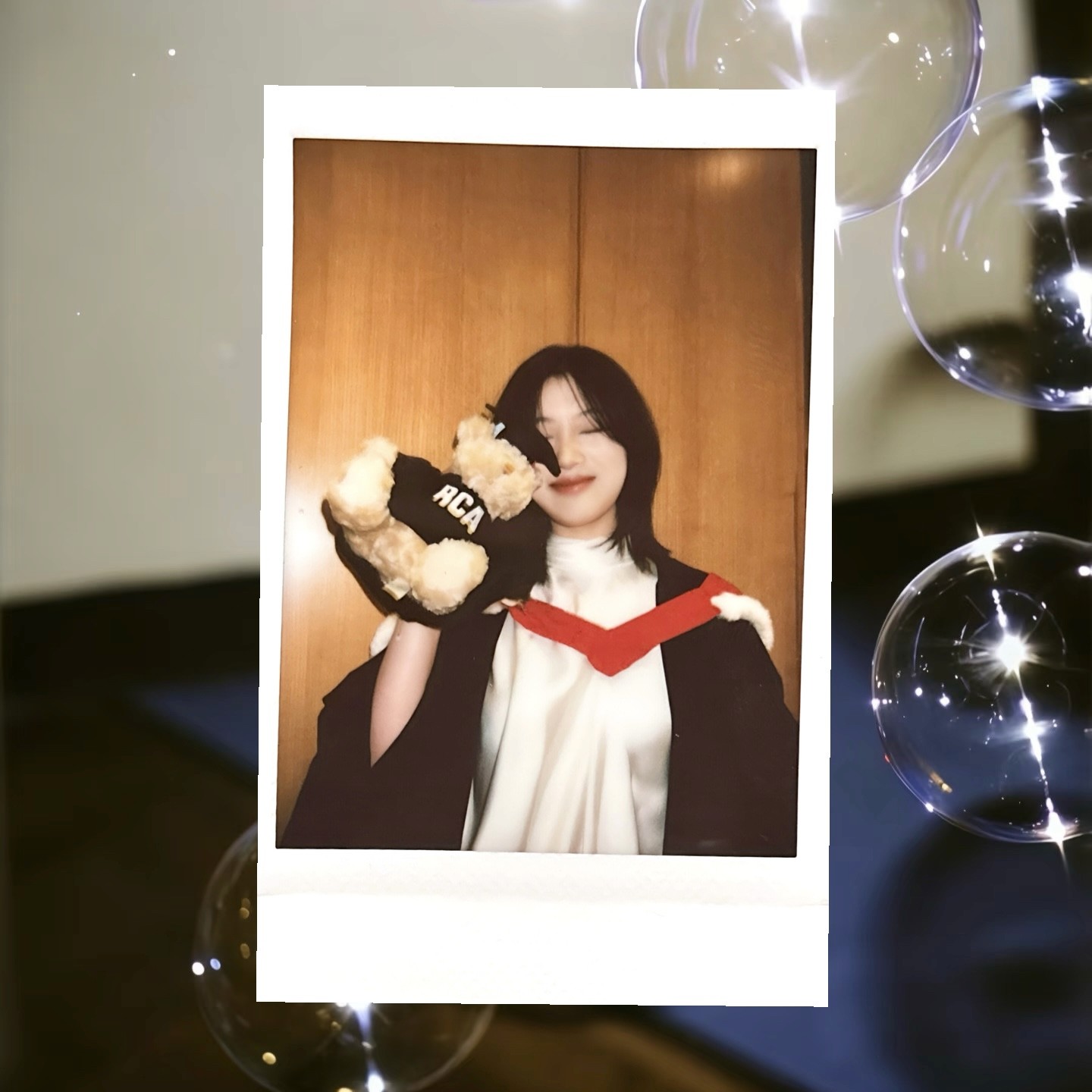
Let me take you back to 2024, the year I started my master's degree in Service Design at the Royal College of Art.
I was working on a project with the London canal resident community, armed with toolkits and theories, ready to "improve" their lives. Then, one of the canal residents said:
"Designers come, they observe, they make wonderful projects, but nothing really changes for me."
It was a whirlpool beneath the sea.
It made me realise that I was only looking at them, not with them.
This occurrence redefined my role and my notion of service design, shaped my today's practice on three pillars:
Co-creation: Moving from designing for people to designing with them is about building trust as the primary infrastructure and ensuring that stakeholders' perspectives are deeply embedded in the service transformation.
A Flexible Role: I’ve learned to weave in methods from other disciplines which pushed me beyond the boundaries of service design itself and myself.
Mutual Reflection: I used to think I was the one shaping the work, but the work was shaping me too. These exchanges have changed how I ask questions and how I sit with things I don't yet understand.
Let me take you back to 2024, the year I started my master's degree in Service Design at the Royal College of Art.
I was working on a project with the London canal resident community, armed with toolkits and theories, ready to "improve" their lives. Then, one of the canal residents said:
"Designers come, they observe, they make wonderful projects, but nothing really changes for me."
It was a whirlpool beneath the sea.
It made me realise that I was only looking at them, not with them.
This occurrence redefined my role and my notion of service design, shaped my today's practice on three pillars:
Co-creation: Moving from designing for people to designing with them is about building trust as the primary infrastructure and ensuring that stakeholders' perspectives are deeply embedded in the service transformation.
A Flexible Role: I’ve learned to weave in methods from other disciplines which pushed me beyond the boundaries of service design itself and myself.
Mutual Reflection: I used to think I was the one shaping the work, but the work was shaping me too. These exchanges have changed how I ask questions and how I sit with things I don't yet understand.
Swimming into an ocean doesn't make you a swimmer.
And like a lot of life lessons, this one starts with a failure.
Let me take you back to 2024. It was the year I started my master's degree in Service Design at the Royal College of Art. I was working on a project with the London canal resident community, armed with toolkits and theories, ready to "improve" their lives. Then, one of the canal residents said:
“Designers come, they observe, they make wonderful projects, but nothing really changes for me."
It was a whirlpool beneath the sea.
It made me realise that I was only looking at them, not with them.
This occurrence redefined my role and my notion of service design, shaped my today's practice on three pillars:
Co-creation: Moving from designing for people to designing with them is about building trust as the primary infrastructure and ensuring that stakeholders' perspectives are deeply embedded in the service transformation.
A Flexible Role: I’ve learned to weave in methods from other disciplines which pushed me beyond the boundaries of service design itself and myself.
Mutual Reflection: I used to think I was the one shaping the work, but the work was shaping me too. These exchanges have changed how I ask questions and how I sit with things I don't yet understand.
The exploration continues
The exploration continues
The exploration continues
If you’ve read this far, you’ve probably noticed I’ve stopped trying to pin myself down to a single label.
I'm keen on the things happens in the spaces between definitions.
I prefer to adapt within uncertainty to deliver value that genuinely matters to people's lived experiences.
The exploration is continuing…
If you’ve read this far, you’ve probably noticed I’ve stopped trying to pin myself down to a single label.
I'm keen on the things happens in the spaces between definitions.
I prefer to adapt within uncertainty to deliver value that genuinely matters to people's lived experiences.
The exploration is continuing…
If you’ve read this far, you’ve probably noticed I’ve stopped trying to pin myself down to a single label.
I'm keen on the things happens in the spaces between definitions.
I prefer to adapt within uncertainty to deliver value that genuinely matters to people's lived experiences.
The exploration is continuing…
Back to homepage
Personal Journey